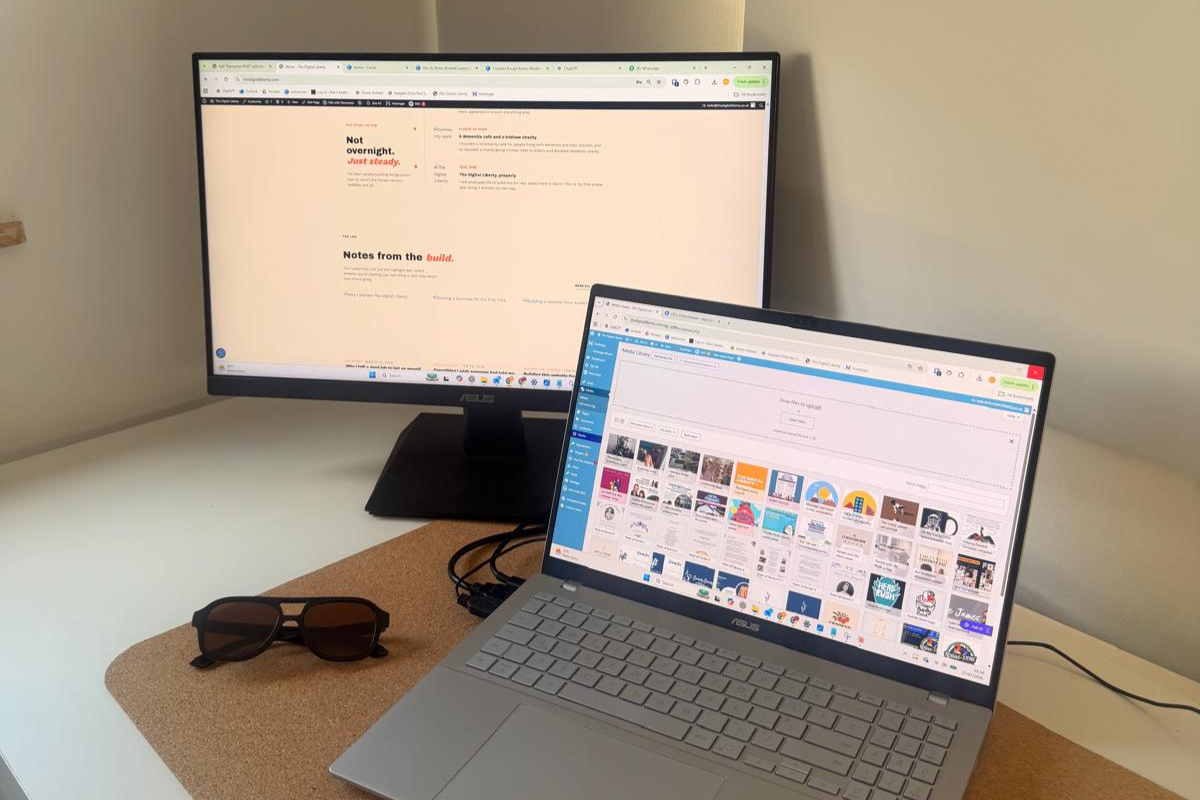
Building a Business Website From Scratch: The Mistakes I Made (So You Don’t Have To)
I built my first website when I was thirteen. It was for a clothing brand I was running out of my bedroom, t-shirts and hats I was printing and posting out, some of it all the way to Australia, which still makes me laugh when I think about it. I had no idea what I was doing. I just wanted people to actually be able to find the stuff.

That was basically the start of it. A few years later I was doing the same thing for my photography business, building a little site so people could see wedding and christening galleries before I’d even left school. Then it just became a thing I did for other people too. A stonemason. A bakery. A cleaning company. Pubs, cafés, a beauty clinic, a couple of local charities. Proper client work, done in the evenings around a full-time job, for years, because I genuinely enjoyed it. You can have a look through some of it on my portfolio if you’re nosy.
So when it came to building my own website for The Digital Liberty, I thought it’d be the easy bit. I do this for a living now, I know what I’m doing.
It still took longer than I planned. Every time.
Turns out “quick job” is doing a lot of lying
Writing the copy, resizing an image so it doesn’t look squashed on mobile, fiddling with a section because it looked fine at 9am and wrong by 2pm — none of that sounds like much on its own, but it adds up fast. If you’re building your own site while also trying to run the business it’s for, whatever timeline’s in your head, double it. Maybe add a bit more on top of that.
The bit that actually properly worried me
I’d set up my enquiry form and newsletter sign up, felt very pleased with myself, tidy confirmation messages and everything — and then realised the entries weren’t actually going anywhere. No error message. Nothing bounced. It just quietly wasn’t working.
If there’s one thing I’d want anyone building their own site to take from this, it’s that a form looking fine isn’t the same as a form actually being wired up properly. Test it yourself. Send yourself a real enquiry. Sign up to your own list — mine’s called The Download, if you want to see what that looks like — and check it actually lands in your inbox. Your website’s whole job is bringing you people, and a quietly broken form means you could be losing them without ever knowing.
Once I’d caught it, I set up an automatic reply too, so anyone who does get in touch hears something back straight away, even if I’m elbow-deep in someone else’s website at the time.
A few other things that ate more time than expected
Privacy policies and legal pages — easy to forget, not optional, especially once you’re collecting names and emails through a form.
Hosting and domains actually talking to each other — boring, invisible when it’s working, everything when it isn’t.
My own wifi, embarrassingly. I fought a weak signal in my office for way too long before finally giving in and buying a booster.
Testing everything, on everything. Click every button, submit every form, check it on your phone, then someone else’s phone too. Things break in ways you won’t predict until you actually try them.
What I’ve actually taken from all this
Honestly, that not much has changed since I was thirteen with a clothing brand and no clue what I was doing. It’s less about knowing everything up front and more about being willing to sit in the not-knowing long enough to sort it out.
If you’re staring down your own website right now, my honest advice is the one I’d give myself: give it more time than feels reasonable, test everything twice, and don’t assume something’s working just because it looks fine on the surface.
And if you’d rather just hand the whole thing over to someone who’s done this more times than she can count, here’s what that looks like and what it costs — no mystery quotes — or you can just tell me a bit about what you’re building and we’ll go from there.
This is one entry in The Log — the honest bits from building The Digital Liberty, not just the highlight reel.